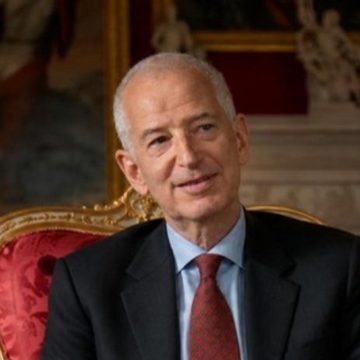
Biography
Philip Marcovici is a Canadian lawyer, author and teacher who advises governments, financial institutions and wealth-owning families on taxation, wealth management and family governance. He spent close to three decades at the international law firm Baker McKenzie and is the author of The Destructive Power of Family Wealth and The Transformative Power of Family Wealth.
Legal career
Marcovici holds law degrees from the University of Ottawa and Harvard Law School. He began his career as a corporate tax lawyer in New York before joining Baker McKenzie in Hong Kong in 1982, where he became a partner practising international taxation. He advised multinationals, financial institutions and families on Canadian, Hong Kong and US tax as well as cross-border commercial matters. After twelve years in Hong Kong in the period leading up to the 1997 handover, he moved to Zurich, where he spent around fifteen years as private banking shifted from undeclared money towards tax transparency.
Within the firm he helped to found the Asia-Pacific tax practice and the international wealth management practice, chaired the European tax practice and founded LawInContext, the firm's interactive knowledge venture, serving as its chief executive. He retired from Baker McKenzie at the end of 2009 and received the firm's Russell Baker Award in 2010 for his contribution to its global tax practice. He was closely involved in establishing the Liechtenstein Disclosure Facility, a programme that allowed taxpayers to regularise previously undeclared assets.
Writing and teaching
His first book, The Destructive Power of Family Wealth: A Guide to Succession Planning, Asset Protection, Taxation and Wealth Management, was published by John Wiley in 2016. It examines how wealth can damage relationships and businesses within families. His second, The Transformative Power of Family Wealth: Helping Families and their Communities Capture its Regenerative Potential, was published by Wiley in 2025. It addresses succession, family conflict, rising inequality and political risk, and proposes what he calls regenerative tax systems for governments seeking strong economies with less inequality.
Marcovici teaches on taxation, wealth management and family governance. He is a founding adviser to, and a lecturer and facilitator for, the Multi-Generational Leadership Programme at the Cambridge Institute for Sustainability Leadership, and has taught as adjunct faculty at Singapore Management University. He sits on the advisory committee of the Hong Kong University of Science and Technology's centre for Asian family business and on the boards of several wealth management and family succession entities. He is a senior adviser to Ispahani Advisory and is based in Hong Kong.
Recognition
His awards include the Citywealth Magic Circle Lifetime Achievement Award in 2009, the Wealth Management Innovator Award in 2011, the Society of Trust and Estate Practitioners Lifetime Achievement Award in 2013 and the WealthBriefing Lifetime Achievement Award in 2016.
On Wealth Office
Philip Marcovici appeared on Wealth Office in the episode "Can Family Wealth Destroy the People Who Inherit It?" with Michael Macfarlane. Drawing on four decades of client work, he argued that any amount of wealth is enough to damage a family, and that open communication, preparation of every family member and involving the next generation in decisions can reverse that. He discussed philanthropy as a way to engage family members with no interest in the operating business, his view that society is not optional for mobile wealth owners, three kinds of mobility that he expects to narrow, the security offered by trusted governments such as Singapore and Switzerland, and the UK's removal of the non-dom regime.
On Wealth Office
Philip Marcovici, author of The Transformative Power of Family Wealth, on why any amount of money can damage a family and how purpose and preparation can reverse that.
Insights drawing on Marcovici


 Editorial · Never sponsored