Episode overview
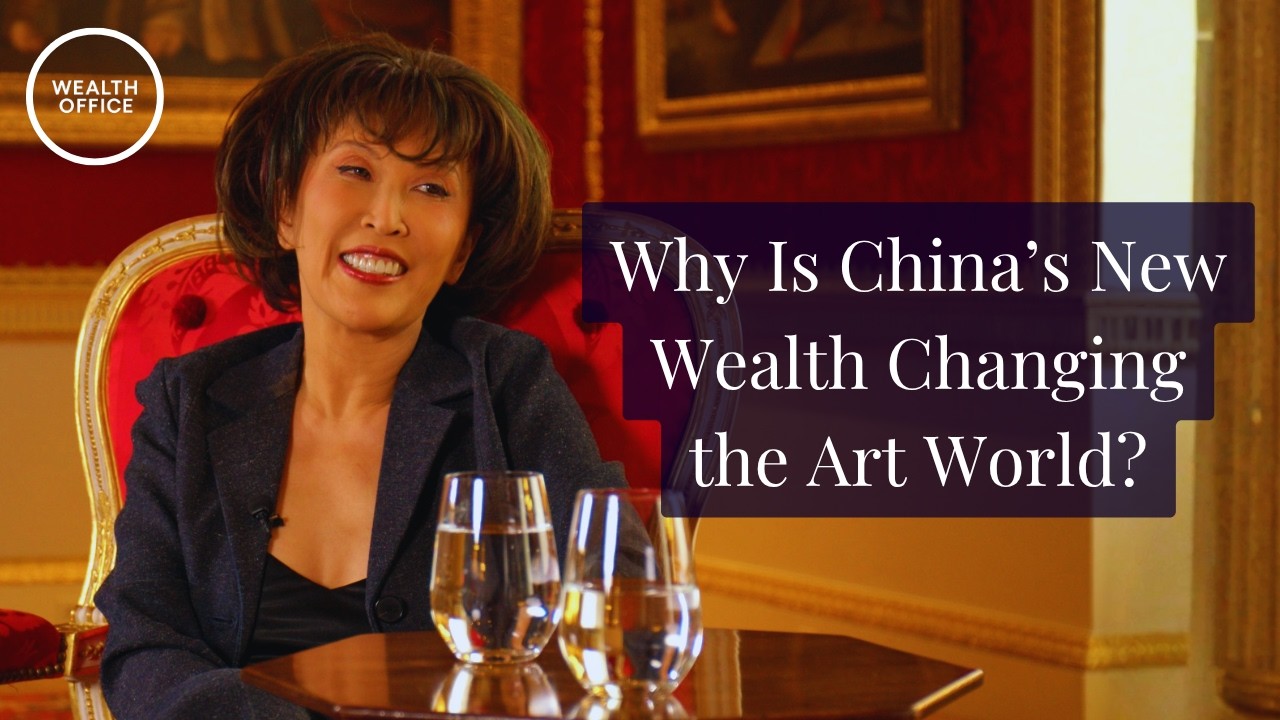
Michael Macfarlane opens with a puzzle. A Yale professor has traced a 300-year correlation between stock markets and art sales, yet with equities at record highs, art sales are falling. Pearl Lam, introduced as a gallerist who has spent more than 20 years reimagining China's cultural place in the world, attributes the break to generational and technological shifts, with the pandemic pushing the market onto digital platforms. She also questions whether stock markets still reflect the real economies beneath them.
Lam adds a third shift, which she calls geographical. In her account, many young heirs in North America and Western Europe want experiences, and do not want the cost and responsibility of managing inherited collections. Their counterparts in China, the rest of Asia and the Middle East, she says, want to build collections, driven by a passion for their culture and for cultural exchange. She explains how the Chinese market differs, with antiquities, classical painting and modern ink painting dominating, and buyers under 40 favouring international art. She also describes the scholarly tradition of the treasure room, where collectors once shared scrolls and jade over tea.
The second half considers how artists and collections acquire value. Lam argues that supply and demand are not enough without credentials from museums and important collectors, and doubts that shares in artworks will succeed without answers on management and governing law. She urges young collectors to be honest about their motives. She also discusses China's technological rise, the Labubu phenomenon and its staying power, and her view that AI threatens conceptual art while raising the value of craft.
Key ideas
A broken correlation
Macfarlane cites a Yale professor's 300 years of data linking art sales to stock markets, a link that now appears broken as equities rise and art sales fall. Lam names a generational shift and a technological one, accelerated during COVID, when online auctions and viewing rooms became normal. She also asks whether the stock market truly reflects the economy. In her view the art market needs a new definition.
A geographical shift in collecting
Lam argues that many young heirs in the West want experiences and do not want the responsibility and insurance costs of inherited collections. Inheritance tax, she notes, can be handled through foundations and museum donations, as in the United States and France. Young people she meets in China, Asia and the Middle East behave differently. They want to build collections, driven by a passion for their culture and for cultural exchange.
Two Chinese markets in one
Lam contrasts China with America, where post-war and contemporary art leads. In China, antiquities, classical painting from the Song, Yuan and Qing dynasties and modern ink painting dominate, and contemporary art is very small. Older buyers favour ink painting and antiquities. Collectors under 40, in her account, buy international art, often out of ego and social pressure, and a wish to belong to an international crowd.
Credentials before speculation
Lam compares an artist's market to a share. Supply and demand matter, and marketing can create them, but value also needs credentials, which today come from museum collections, museum exhibitions and important private collections. Without them, she suggests, art resembles NFT speculation, which has not recovered because nothing supported it. Her artist Mr Doodle, whose career grew after a video of him doodling spread, shows a newer route to attention.
Shares in art have been tried
When Macfarlane raises plans to offer a large private Rembrandt collection as shares on a stock exchange, Lam recalls an exchange in China selling shares in a Picasso around 2007, which she says failed miserably, not helped by the 2008 financial crisis. Democratisation since 2000, she argues, turned art into an asset class. The open questions for her are who manages the work, when it is sold and which law governs it.
Know why you are collecting
Lam names the main reasons people collect as investment, social pressure and passion, along with preserving the value of money in an unstable world. Some investors never open the crate. Others buy to brand themselves or to hold their own at the dinner table. Her advice is to settle the objective first, then build the collection and choose advisers accordingly, with care, since some advisers in Asia deserve doubt.
AI raises the value of craft
Lam argues that AI could make conceptual art unnecessary, since a prompt can produce a concept and the look of an installation. Painting and sculpture, long looked down on by art schools that teach concept, may be valued very differently in the next 10 to 20 years. She sees homogeneity as a wider problem, driven less by AI than by clients who commission what feels safe, and argues for celebrating difference.
In their words
But you have to have credentials. The credentials as of today it is the museum collections, museum exhibitions or very important collectors collection.
— Pearl Lam, Wealth Office
But who's going to manage it? Are you going to trust that person who's going to manage it and to sell it at the right time? What law is going to govern this?
— Pearl Lam, Wealth Office
So all that is for different reasons, but they have to be honest to themselves. Why are you collecting art?
— Pearl Lam, Wealth Office
One thing, I always say that if you have an AI, you don't need conceptual art because you just type what you want and then everything will come out.
— Pearl Lam, Wealth Office
Today what we need to do is to celebrate differences.
— Pearl Lam, Wealth Office
Quotes are taken word for word from the episode transcript.
Questions this conversation answers
Why does Pearl Lam think young Asian collectors differ from their Western peers?
Pearl Lam says many young Western heirs prefer experiences and do not want the cost and responsibility of managing inherited collections. In China, the rest of Asia and the Middle East, she finds young people who want to build collections, driven by passion for their culture and a desire for cultural exchange. She calls this a geographical shift in the art market.
What does Pearl Lam think of Labubu?
Lam compares Labubu with Disney characters and Hello Kitty, and asks whether it can achieve the same longevity. She believes Pop Mart never expected global success, which followed a K-pop star using the toy. She notes it has no animation behind it, cites an FT report that the Labubu market has dropped 30%, and says Pop Mart must now build longevity.
How does Pearl Lam see China's technological rise?
Lam says technology has replaced property as the main force pushing China's economy since the fall of Evergrande. She describes driverless taxis in Shanghai's Pudong district, press reports of more robotic factories than in America, and DeepSeek. She argues that US restrictions on advanced chips have pushed Chinese innovation forward, and that provincial mayors now promote AI and technology.


 Editorial · Never sponsored