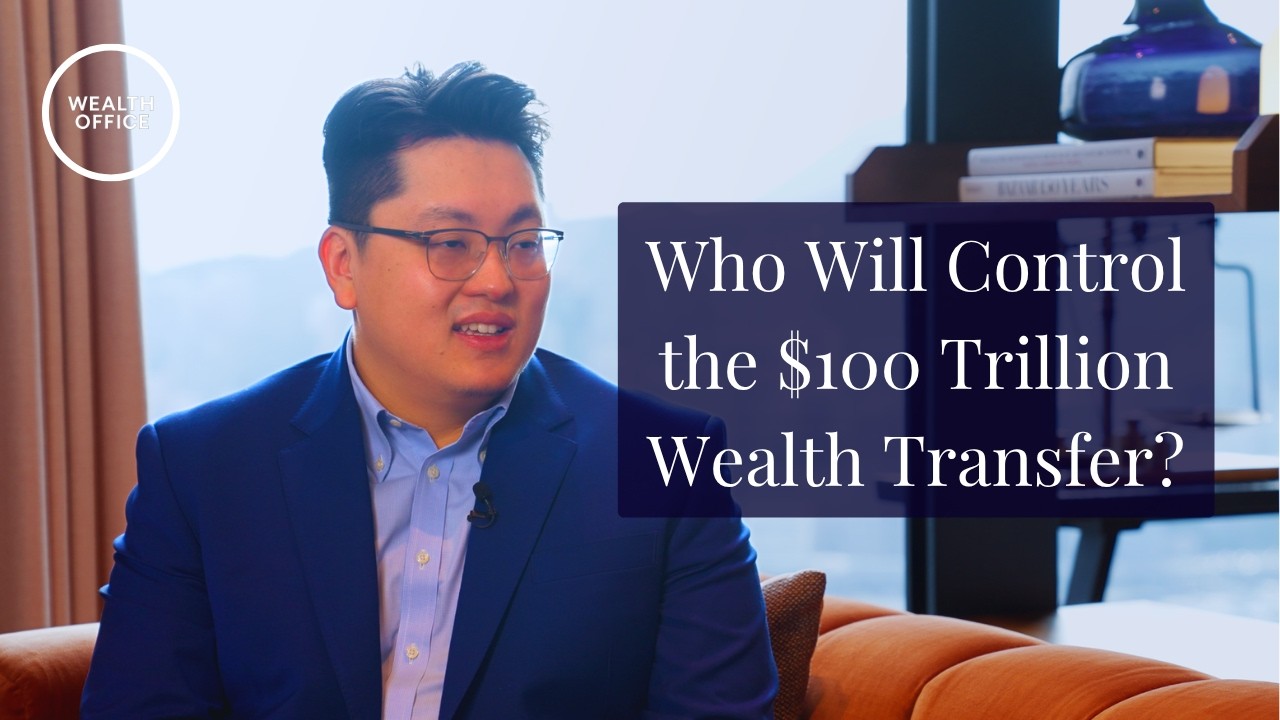
Episode overview
Michael Macfarlane opens with the scale of the moment. He cites estimates that more than US$100 trillion of private wealth will pass between generations over the next two decades, nearly half of it in Asia. Marshall Jen, a scholar-practitioner embedded in Asia's family office ecosystem, accepts the scale and questions the tools. Trusts and insurance have been used for a century, he says, yet families still fight, and assets can be frozen while they do. In his view, people fight over emotion more than ownership.
Jen's central proposal is a division of roles, with families acting as strategists and professionals as tacticians. He describes the well-rounded family office as resting on three pillars. These are investment to preserve and grow wealth, spending to nurture social, intellectual, human and spiritual capital, and donation. He contrasts Asian family offices, which he sees as still building identity and investment mandates, often intuitively and emotionally, with a more professionalised and evidence-based Western model. Because entrepreneurial families tend to turn successful models into businesses, he expects the two to converge.
The second half turns to geography and generations. Jen explains the Greater Bay Area, which links Hong Kong and Macau with neighbouring mainland cities, and argues that Hong Kong and Singapore may be building one ecosystem, with Dubai and Abu Dhabi the bigger competitive challenge. He describes Hong Kong's family businesses as built on trust among friends and relatives, and as closely engaged with government policy. On succession, he observes that next-generation executives may hold the title while patriarchs still decide. A small portfolio allocation that proves its worth, he suggests, can be what shifts the family's thinking.
Key ideas
An emotional problem before a structural one
Jen argues that wealth transfer advice remains largely conventional. Families have used trusts and insurance for a century, yet disputes and divorces still occur and assets can be frozen. He believes people fight over emotion more than ownership. He also notes that family members often mean different things by succession, with parents thinking of values and stories and children of leadership transition or asset management.
Families as strategists, professionals as tacticians
Jen's model for securing the wealth transfer divides responsibilities. Families should learn much of what professionals know and add their own family knowledge to form a strategy and build alignment. Professionals should understand other disciplines while offering their own expertise. He sees this partnership in Hong Kong's long-established family businesses, whose founders had clear visions and hired professionals who understood them.
The three pillars of a family office
Jen considers the term family office overused and often reduced to an investment vehicle. He describes a well-rounded family office as having three pillars. The first is investment to preserve, safeguard and grow wealth. The second is spending to nurture social, intellectual, human and spiritual capital. The third is donation, since he believes a family office ultimately exists to contribute to the family's home.
Asian and Western models converging
Jen sees Asian family offices as still doing identity planning and building investment mandates, often investing with friends and family on intuition. Western offices are more professionalised and evidence-based. Entrepreneurial Asian families, he notes, turn successful models into businesses, so single family offices become multi-family offices that report to stakeholders and grow more institutional. For that reason he expects most to converge.
Investing in people as well as assets
Jen distinguishes between a family office investing in assets and a family office investing in its next generation. Many heirs he works with wear two hats, looking after the family office while running their own ventures, for example in AI. Families may dislike losing money, he says, but the door is open. Backing a next-generation member's venture is, in his view, investing in the future.
Titles without decisions
Macfarlane cites research that more than two-thirds of Asian family offices are led by next-generation executives averaging 44. Jen notes that patriarchs in their eighties often still make the decisions. Approval takes time, and heirs may fear that a mistake will harm their reputation and inheritance. He suggests that a small allocation, such as 5% of the portfolio, that proves its return can shift family thinking.
Hong Kong, the Greater Bay Area and the Gulf
Jen describes the Greater Bay Area as nine mainland cities plus Hong Kong and Macau, combining technology and finance, with unlimited travel to Hong Kong for its residents. An advocate for Hong Kong, he questions whether Hong Kong and Singapore are true competitors or co-builders of one Asian ecosystem. In his view, Dubai and Abu Dhabi present the bigger challenge for attracting families.
In their words
People are fighting over emotion rather than ownership.
— Marshall Jen, Wealth Office
And I told him the highest level of governance is that you actually trust each other.
— Marshall Jen, Wealth Office
Asian families are very interesting creatures and it's, it's different type of engine but it also is one of the downfall because they do let the emotion take over.
— Marshall Jen, Wealth Office
The next generations are very innovative and they're very open to ideas. … the problem is when are they actually empowered to make certain decisions?
— Marshall Jen, Wealth Office
So I think that's going to be the next model for family offices, that families understand a lot of things, they become strategists and they will outsource or in house hire out a lot of the professional to execute their vision.
— Marshall Jen, Wealth Office
Quotes are taken word for word from the episode transcript.
Questions this conversation answers
What does Marshall Jen mean by families as strategists and professionals as tacticians?
Jen argues that families should understand much of what their advisers know and combine it with family knowledge to set strategy and build alignment. Professionals should then execute that vision with their expertise. He sees this division of roles in Hong Kong family businesses that have lasted a century or more.
What are the three pillars of a family office in Marshall Jen's view?
Jen describes three pillars. Investment preserves, safeguards and grows wealth. Spending nurtures the family's social, intellectual, human and spiritual capital. Donation covers philanthropy, which he links to a family office's role in contributing to the family's home and, for some families, to bringing generations into alignment.
Does Marshall Jen see Singapore as Hong Kong's main rival for family offices?
Jen describes himself as an advocate for Hong Kong and sees an advantage in its access to the Greater Bay Area. He questions whether Hong Kong and Singapore are really competitors or are jointly building an Asian family office ecosystem, and regards Dubai and Abu Dhabi as the bigger challenge.


 Editorial · Never sponsored