Episode overview
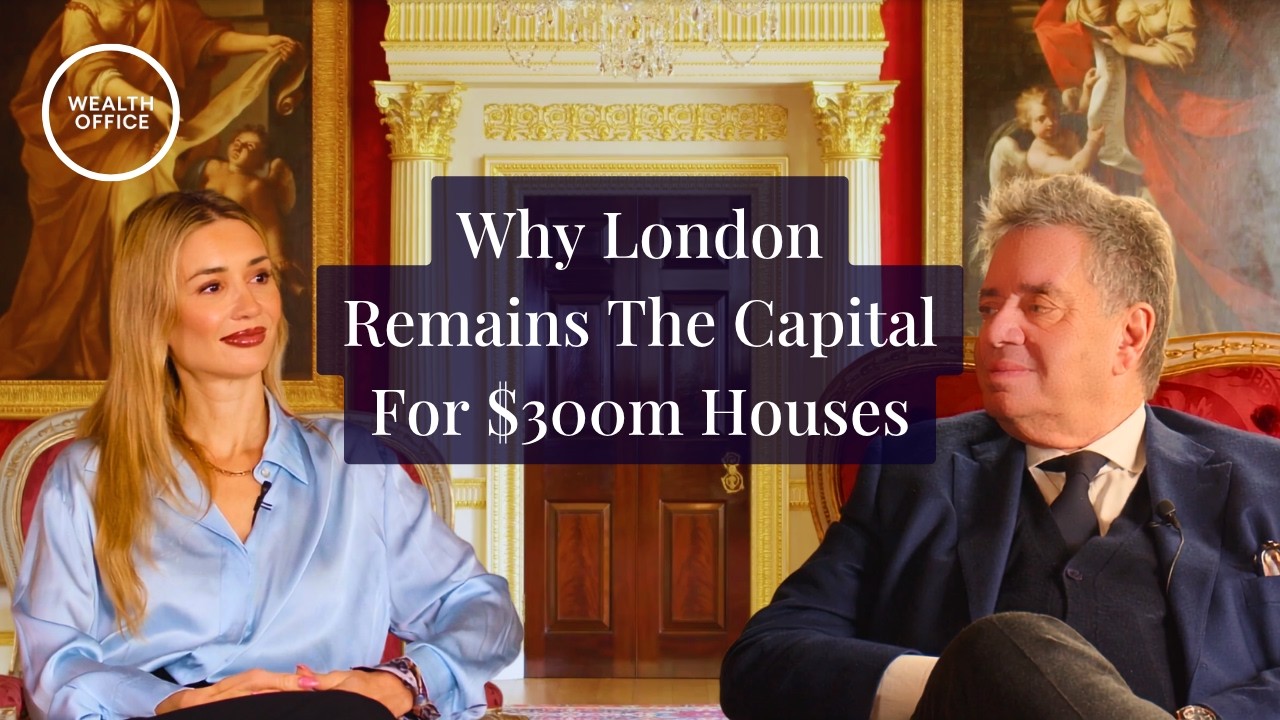
In this Wealth Office X conversation, Michael Macfarlane is joined by Gary Hersham and Irina Gamagina to explore ultra-prime real estate and what property means when money is no longer the main constraint. Macfarlane opens with a thought experiment. If he had just sold his company and had $100 million to spend on a home, where should he buy? Hersham chooses London, and prime Belgravia in particular, arguing that conflict in the Middle East and a sense of insecurity in Dubai and Abu Dhabi are restoring London's standing as a safe haven. Gamagina notes that wealthy clients rarely have a single residence, and often hold homes in three or four countries.
The guests describe a market that runs on relationships and discretion. Hersham doubts that much business happens through so-called pocket listings, since properties shown privately are soon discussed over supper. Gamagina recalls Russian buyers at One Hyde Park who arrived through another agent while holding her own brochure. Both describe buyers who may fall for a property but are then disciplined by stamp duty, ownership structures and price, and who now seldom compete at the very top. Gamagina argues that limited stock in prime central London supports prices.
The conversation also traces how the buyer base has shifted, from Russian buyers in Hampstead and Swedish and Nigerian buyers in earlier periods, alongside constant Middle Eastern demand, to Chinese buyers moving from small flats to very large homes and to tech and crypto money today. Outside London, Hersham points to Madrid and Milan, and Gamagina to Zurich, Barcelona and Miami. Both describe purchases as decisions made by the family as a whole, shaped by schools, space and lifestyle, and Gamagina sees a younger generation that prefers new, practical homes to historic houses.
Key ideas
London's return as a safe haven
Asked where to spend a hypothetical $100 million on a home, Gary Hersham chooses London, and specifically prime Belgravia. He links this to conflict in the Middle East and a sense of insecurity in Dubai and Abu Dhabi. He also describes a long-standing flight of capital, in which people bring money to the UK to buy property or art so that their capital sits in a safe haven.
A market with few real secrets
Hersham doubts that much ultra-prime business happens through pocket listings. Buyers may browse online, he says, but they call agents they have known for years, and properties shown privately are soon discussed over supper. Irina Gamagina agrees, recalling buyers at One Hyde Park who used another agent despite holding her brochure. What stays private is the identity of the buyer, which London agents rarely disclose.
Emotion opens the process, numbers close it
Both agents describe buyers falling for a property before the costs come into view, including stamp duty and the question of whether a property is held in a company. Hersham says a buyer at £65 million or £70 million may refuse to go up by £5 million because he believes he has found the right price. At the very top, he says, buyers now tend to avoid competing.
Scarcity supports London prices
Gamagina argues that prime central London will always be stock limited because high-rise building is restricted, which she says gives a measure of price security. Even after reviewing everything on the market, she sometimes cannot find the right property for a client. She acknowledges a few opportunities linked to the UK's economic situation, high stamp duty and new taxes, but believes prices are holding up steadily.
A shifting roll-call of buyers
Hersham traces decades of change. Russian buyers favoured Hampstead in the late 1990s and 2000s, Swedish buyers arrived after a tax change, Nigerian buyers followed, and Middle Eastern buyers have been constant. Chinese buyers moved from small flats to very large homes. Gamagina's current clients include Saudi buyers, a British buyer of Indian heritage who decided against Dubai, and tech, longevity and crypto money.
New centres beyond London
Setting the $100 million budget aside, Hersham names Madrid as one of Europe's fastest-growing cities and points to Milan, which he links to Italy's arrangement allowing a fixed annual tax payment. He expects Paris to pick up soon. Gamagina describes young tech entrepreneurs moving to Zurich for its safety, taxes and lifestyle, and clients settling in Barcelona, Madrid and Miami.
Families decide, and younger buyers want new
Both agents describe purchases as family decisions shaped by children, schools and space. Gamagina sees families moving just outside London for schools with more room for sport. Among younger buyers she notes a preference for practical new homes with facilities, citing a young tech couple who chose a penthouse at Park Modern over an old house in Belgravia. History, she says, matters less than before.
In their words
There's no real secrets about what is available and what is sold in the top end of the residential market.
— Gary Hersham, Wealth Office
It's just basically all about your relationship with your buyer.
— Irina Gamagina, Wealth Office
So, I think London will always be stock limited, prime central London, because we're not allowed to build high-rises on every corner.
— Irina Gamagina, Wealth Office
But really, a buyer wants to feel safe in your hands.
— Gary Hersham, Wealth Office
They didn't buy a piece of history. They wanted triple ceiling height, park views.
— Irina Gamagina, Wealth Office
Quotes are taken word for word from the episode transcript.
Questions this conversation answers
Is London still a safe haven for ultra-prime buyers?
Gary Hersham believes London is coming back as a true safe haven, citing conflict in the Middle East and a feeling of insecurity in Dubai and Abu Dhabi. Irina Gamagina argues that limited stock in prime central London provides price security. Michael Macfarlane suggests that softer factors, such as schools, friends and local life, also keep people anchored in London.
Are most ultra-prime homes in London sold off-market?
Gary Hersham says not. In his view there are few real secrets at the top of the London market, and pocket listings of the kind common in California and Los Angeles are rare, because properties shown privately quickly become known. Irina Gamagina agrees that it is hard to keep properties off the market and says success depends on the agent's relationship with the buyer.
Who is buying ultra-prime property in London today?
Irina Gamagina describes current clients including Saudi buyers, a British buyer of Indian heritage who decided against moving to Dubai, and buyers from tech, longevity and crypto finance, among them the founder of a large Austrian crypto exchange. Gary Hersham notes that Middle Eastern buyers have been a constant presence and that many younger buyers are drawn to Notting Hill.


 Editorial · Never sponsored