Episode overview
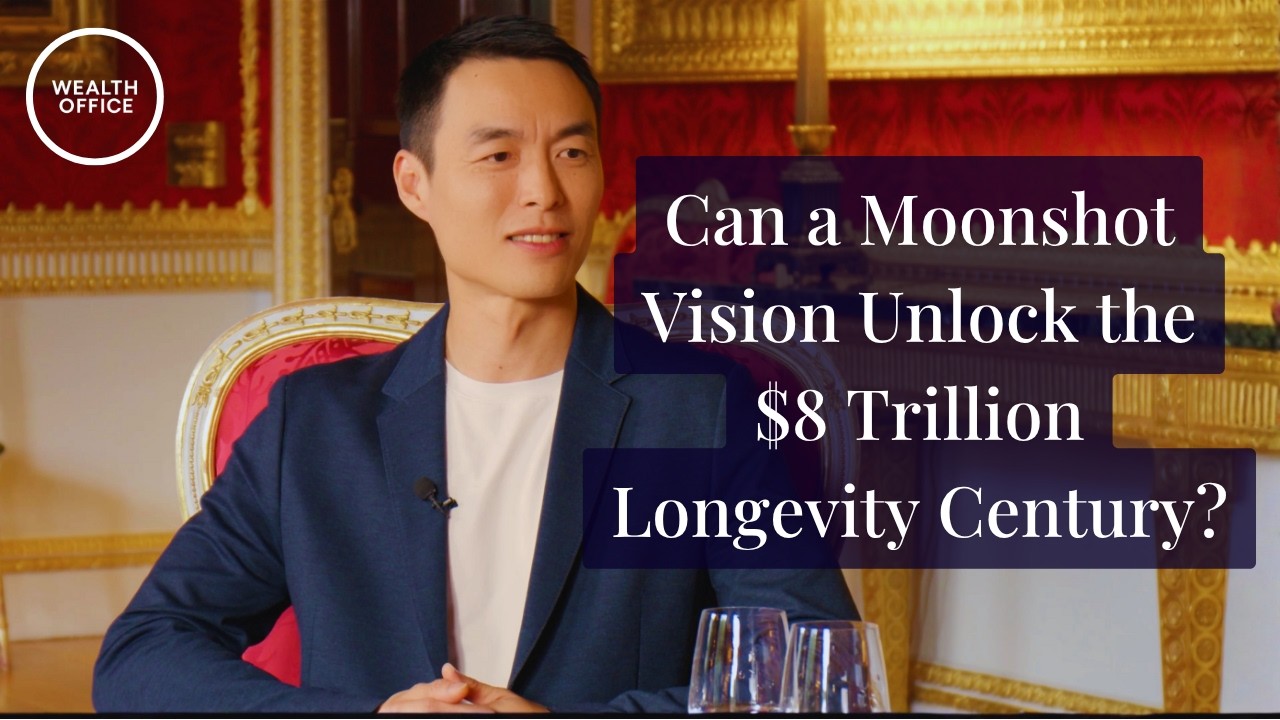
Allen Law sees longevity as one of the defining opportunities of the next decade. Michael Macfarlane opens with a UBS report that names power, artificial intelligence and longevity as the three areas set to drive equity markets, and Law cites its estimate of a US$8 trillion longevity industry by 2030. In his view the opportunity rests on a gap of about nine years, globally, between lifespan and healthspan, and around ten in Singapore. Health systems built on treating sickness, he argues, cannot keep paying for longer years in poor health, and Covid changed how people think about prevention.
Law's answer is Morrow, a chain of lifestyle medical centres backed by a US$156 million commitment. It rests on six pillars of lifestyle medicine: physical activity, nutrition, sleep, stress management, avoiding harmful substances and positive social connection. Most countries are moving slowly because more preventive care seems to mean less sick care, so Law wants the private sector to build a proof of concept that others can follow and that nudges governments to invest. He has also launched a US$70 million venture fund to back early-stage companies that can extend healthspan, especially in Asia, where he sees a funding gap.
The conversation turns to family enterprise. Law's Hong Kong family follows a rule of one family member in one business unit, which has pushed each generation to build something new, from garment manufacturing to real estate, hotels, fitness and now longevity. He describes keeping part of the family's wealth in traditional asset allocation while reserving a separate pool for higher-risk entrepreneurial bets. He closes with advice to founders and a balanced view of family backing compared with institutional capital.
Key ideas
Longevity is a healthspan problem
Law frames the longevity industry around the gap between how long people live and how long they stay healthy, which he puts at about nine years globally. He cites surveys in which more than half of respondents said they did not want to live longer, yet almost all would if those extra years were healthy. For him, the question is how healthily people live, more than how long.
Sick care cannot pay for itself
Law describes health systems that tell people to stay away unless they are ill, then treat symptoms. With lifespans rising, healthspans static and medical costs climbing each year, he says research suggests many countries would go bankrupt on the current model, and raising taxes indefinitely is not possible. Social pressure after Covid and economic pressure on governments are, in his account, pushing systems towards prevention.
Six pillars of lifestyle medicine
Morrow is built on six pillars: physical activity, nutrition and diet, sleep, stress management, avoiding harmful substances, and positive social connection. Law stresses that they are linked, noting that stress undermines sleep. Macfarlane observes that many people invest in fitness through a gym or yoga membership while neglecting the other areas. Law sees the value of social connection as one lesson the pandemic made clearer.
Private capital as proof of concept
Most governments, Law says, are constrained by existing models and fear that more preventive care means less sick care. Singapore has made small investments that raise awareness, but mass adoption has not followed. He believes the private sector can move faster, so Morrow is intended as a working model for others to follow and a nudge for governments to invest more in prevention.
One family member, one business unit
Law's family rule requires each member to lead a business unit. As the family grew from his grandfather to six members in his father's generation and many more in his own, the rule demanded new ventures. Garment manufacturing led to real estate, then hotels, then fitness and longevity. Law credits that philosophy with keeping the family entrepreneurial while preserving wealth.
A safe portfolio and a risk bucket
Law describes keeping part of the family's wealth in a traditional set-up built on asset allocation and diversification, and setting aside a separate pool for entrepreneurial investments that are unproven or early-stage. He frames the balance as calculated risk. Some bets may promise financial upside, he says, while others are made partly because they could help many people. Macfarlane sees the same pattern among his Asian clients.
Family backing versus institutional money
Law sees pros and cons on both sides. Family support opens doors through networks and connections, but it can become a hindrance if family members disagree on risk and reward. Founders backed by venture or institutional money avoid family baggage, yet face constant pressure to grow fast and exit within set timeframes to protect returns. The best outcome, he suggests, comes from balancing the two.
In their words
So it's literally, it's not about how long you live, it's about how healthy you can live your life and fulfil that purpose in life.
— Allen Law, Wealth Office
None of us want to spend our last 10 years in sickbed.
— Allen Law, Wealth Office
So it's scary, right? You can spend a lot but you don't get outcome for the individual's health.
— Allen Law, Wealth Office
But how do we grow wealth at the same time creating impact in the society? I think if you can find this three way approach to your investment, that's the best.
— Allen Law, Wealth Office
Quotes are taken word for word from the episode transcript.
Questions this conversation answers
What is Morrow?
Morrow is a chain of lifestyle medical centres that Allen Law launched with a commitment of about US$156 million in August 2025. It is built on six pillars of lifestyle medicine, covering physical activity, nutrition, sleep, stress management, avoiding harmful substances and social connection. Law describes it as a private-sector proof of concept for preventive healthcare.
Why does Allen Law think longevity is such a large opportunity?
Law points to a UBS estimate that the longevity industry could be worth about US$8 trillion by 2030. He argues that health systems must shift from sick care towards diagnostic and preventive models, that ageing populations need new forms of assisted living, and that closing the roughly nine-year gap between lifespan and healthspan is driving rapid growth.
What is his family's approach to business across generations?
Law's family follows a philosophy of one family member in one business unit. Because the family has grown with each generation, the rule has pushed members to start new businesses. His grandfather began in garment manufacturing, his father's generation moved into real estate, and Law built a hotel group before moving into fitness and longevity.


 Editorial · Never sponsored