Episode overview
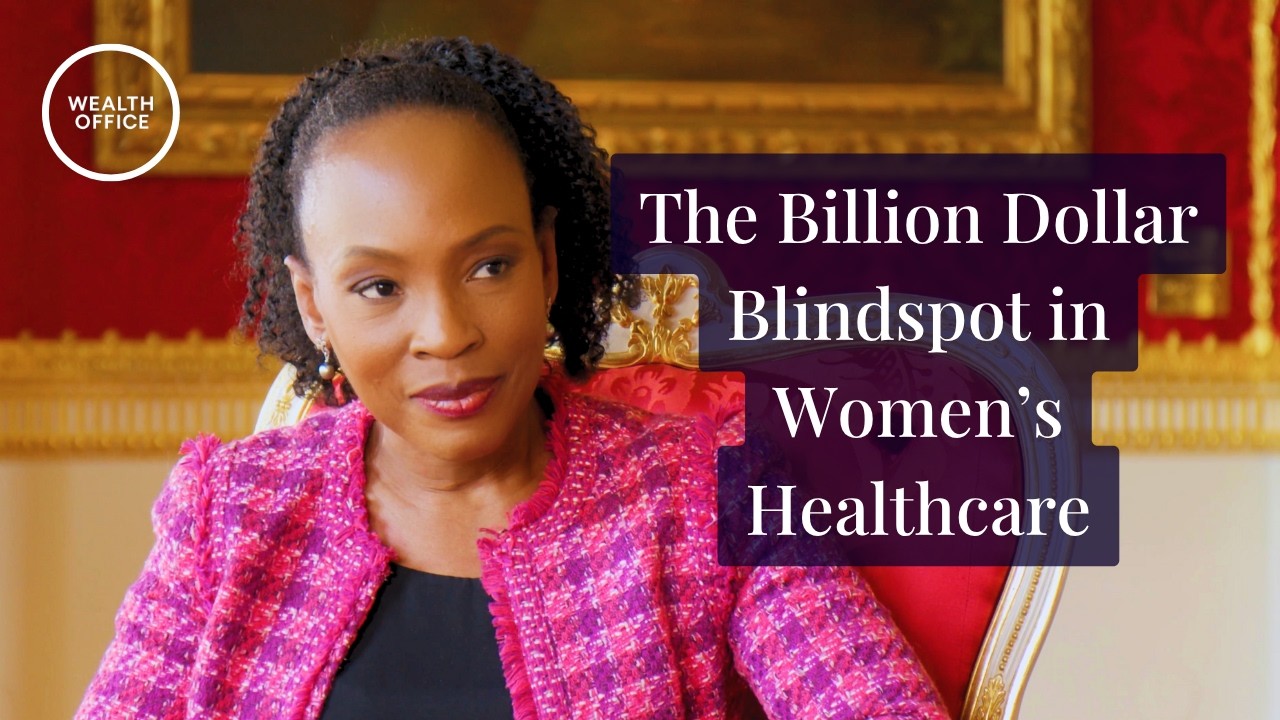
Maryann Selfe argues that healthcare is being repriced in real time, and that the clearest evidence is where capital is going. Speaking to Michael Macfarlane, she cites roughly US$4 billion of health tech venture funding in the first quarter of 2026, up about 25% on the previous year, and a 55% rise in investment in women's health companies in 2024, to about US$10.7 billion according to an SVB report. Selfe agrees that more women are becoming capital allocators, but sees the wealth transfer as a multi-decade process that will accelerate the correction. Her real question is whether it is sustainable.
Her book, The Billion Dollar Blindspot, traces how women came to be excluded from clinical trials after the thalidomide scandal, and how drugs such as Ambien later had to be re-dosed for women. Laws now require women's inclusion, but stratifying trials by sex adds cost and complexity, so the data gap persists. Selfe describes a self-reinforcing cycle in which missing data means no precedent, no insurance reimbursement, a weak commercial case and little capital. She notes McKinsey's finding that women spend about 25% of their lives in poorer health, much of it between 20 and 60.
Selfe identifies three converging forces. There will be 1.2 billion women in menopause by 2030, longer lives bring conditions such as dementia and autoimmune disease into view, and women are gaining control of capital. Because these opportunities sit in scientific and medical innovation with long development timelines, she sees long-duration, flexible family capital as well suited to them, particularly from Asia. She points to Europe's comparatively shallow biotech funding as a cross-border opening. She prefers to call the field health for all, because better knowledge of female biology improves care for everyone.
Key ideas
Follow the money
Selfe reads the repricing of healthcare in capital flows. She cites rising health tech venture funding in early 2026, about US$18 billion raised by healthcare private equity funds in 2025 while generalist funds struggled, and women's health investment that more than tripled between 2019 and 2025. Her test as a healthcare investor is whether such a trend is sustainable, and she believes this one is at an early stage.
How women were written out of the data
After thalidomide caused severe birth defects, Selfe explains, a directive to exclude women of reproductive age from clinical trials became, in practice, an exclusion of all women. Later problems, including the sleep drug Ambien, which women metabolised differently, showed the cost. The NIH Revitalization Act of 1993 mandated women's inclusion, but stratifying results by sex raises cost and complexity, so a data gap remains.
Data poverty as a self-reinforcing cycle
In Selfe's analysis, the gap is self-perpetuating. Without sex-specific data there is no precedent. Without precedent, insurers do not build products, so companies developing solutions lack reimbursement. Without reimbursement the commercial case looks weak, and capital does not follow. She calls this a systems design issue, and argues that a system designed incorrectly creates the conditions for a market correction.
Quality of life in the working years
Selfe's own experience of uterine fibroids led her to question blunt treatments such as hysterectomy, which she says carries serious long-term risks when performed before 50. Many female-specific conditions do not kill, but they cause pain and fatigue. Citing McKinsey, she notes that women spend about 25% of their lives in poorer health, mostly between 20 and 60, with costs borne by families, employers and economies.
Three forces converging
Selfe sees demand building from three directions. By 2030 there will be 1.2 billion women in menopause, and new therapeutics for its symptoms are reaching market. Longer lives mean women may spend up to a third of their lives after menopause, bringing dementia and autoimmune disease into focus. Finally, women are becoming capital allocators with lived experience of the gaps and the power to act.
Europe's funding gap, Asia's opening
Selfe contrasts roughly US$25 billion raised by successful European biotech companies between 2015 and 2025 with about US$219 billion for their US counterparts. She says 66 of 67 European biotech IPOs in recent years were on foreign exchanges, mostly in the US. She sees a cross-border opportunity for Asian long-duration capital, noting the rapid growth in single family offices in Singapore and Hong Kong.
Where the value inflects
Healthcare value, in Selfe's view, rises at each inflection point, from laboratory idea to proof of concept, clinical trials and regulatory approval. She places the largest gains between seed and Series A or B, before commercialisation. She cites Kelonia, which raised a US$104 million Series A in 2022 and was acquired by Eli Lilly for US$3.25 billion, or up to US$7 billion with milestones. Institutions and pension funds are rarely present at that stage.
In their words
Hold on a second, this is huge. This is not a women's issue, this is a societal issue, this is an economic issue.
— Maryann Selfe, Wealth Office
So it's almost like this data poverty is a self reinforcing cycle.
— Maryann Selfe, Wealth Office
And I would submit to you that actually optimising for the health span is more important than optimising for the lifespan. Who wants to live to 100 in chronic pain every day?
— Maryann Selfe, Wealth Office
So it's not if the capital will flow into building solutions for the future of health care for all. It is as a capital allocator, what side of that trade do you want to be on?
— Maryann Selfe, Wealth Office
And so, for me, it's not a world about women getting personalised care, but it's a world where we all have healthier lives because our care is personalised.
— Maryann Selfe, Wealth Office
Quotes are taken word for word from the episode transcript.
Questions this conversation answers
What is the 'billion dollar blindspot'?
It is the title of Maryann Selfe's book and her term for a structural gap in healthcare. She argues that medicine historically treated male biology as the default, leaving too little sex-specific data on women. That gap, in her view, has left female health conditions underserved and underpriced, creating both a social problem and a significant investment opportunity as it corrects.
Why does Maryann Selfe think family offices suit this opportunity?
Selfe argues the opportunities lie in scientific and medical innovation with long development timelines, often in private markets where investment infrastructure is immature. She sees long-duration capital with flexible, intergenerational mandates, and a purpose alongside financial return, as better suited than venture capital or pension funds, which may be constrained by structure or regulation.
Why does she prefer the phrase 'health for all'?
Selfe says better knowledge of female biology improves care for everyone. She gives the example of cardiovascular disease, the leading killer of women worldwide, and notes that the heart has oestrogen receptors. Understanding that mechanism could improve diagnostics and treatment for men as well. She also finds that investors respond more readily to this framing than to 'women's health'.


 Editorial · Never sponsored